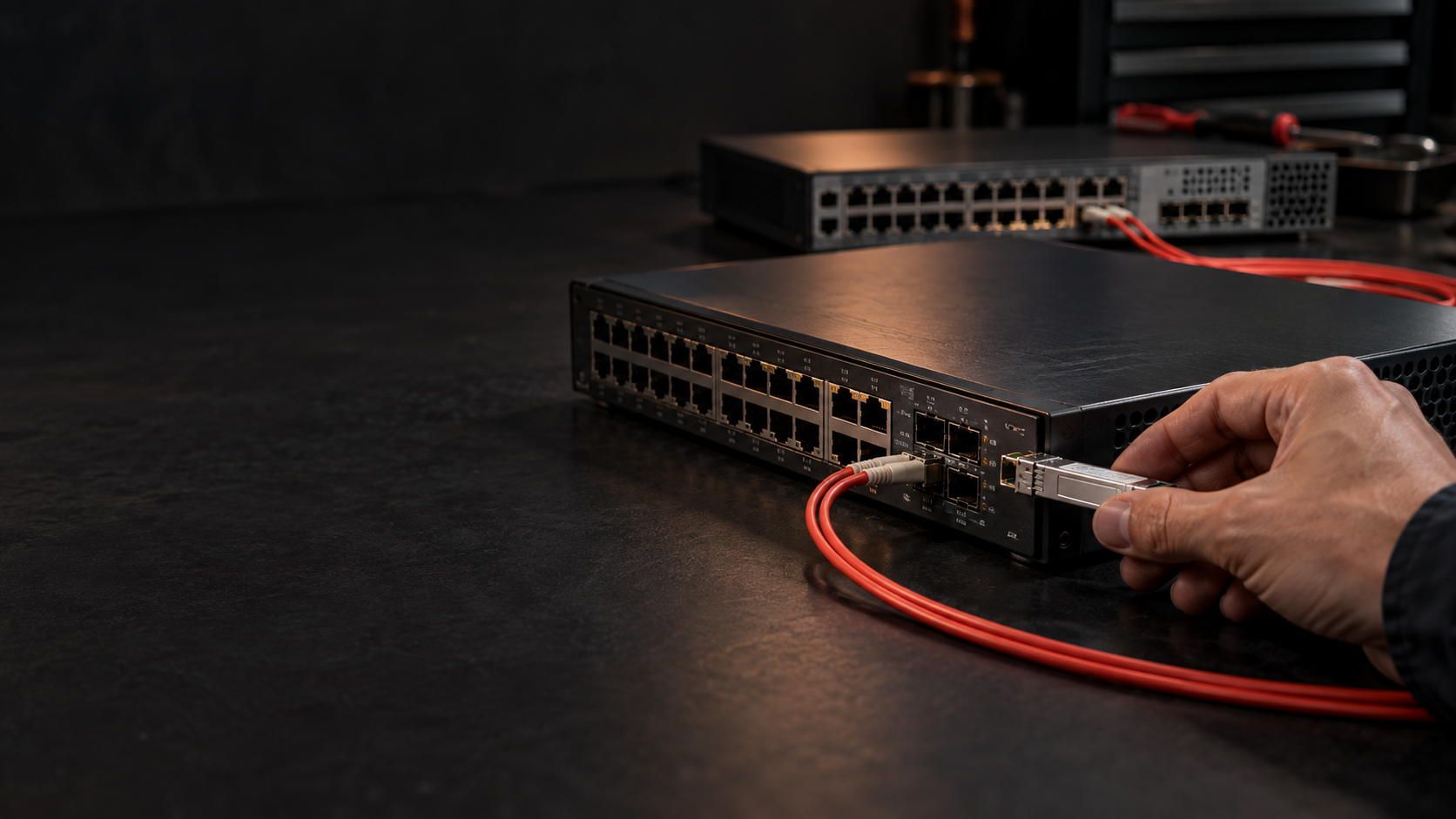
Move platforms while keeping network intent in view.
A network transition changes more than command syntax. Vendor defaults, feature behavior, management access, and operational tools can all affect the result. Netistics connects source-to-target engineering with the practical work of pilots, maintenance windows, and acceptance checks.
ENGINEERING IN CONTEXT
Carry the intent across the transition.
A vendor transition changes more than syntax. Translate the network's required behavior into a target design, verify platform differences, and move through agreed stages with checkpoints and a recovery path.
NETISTICS / A QUESTION FROM THE WORK
Does the target feature behave the same way?
Similar command names do not establish equivalent behavior. Compare routing, VLANs, access policy, and redundancy against the target platform. Make feature gaps and unresolved assumptions visible before the cutover.
Intent mapping · feature gaps · acceptance checks
INFRASTRUCTURE / SYSTEM VIEW+
Preserve the network intent
INTENT MAPPING
SOURCE NETWORKTARGET NETWORK
Feature mapping · staged cutovers · acceptance and rollbackIllustrative architecture
Identify what the existing network is required to do before deciding how the target should be configured. Connect routing, switching, access rules, and management settings to the services and owners that rely on them.
Map the intended behavior to the target platform and software version. Identify differences in features, defaults, and integration requirements, and record where an engineering decision or a revised design is needed.
Test the proposed approach on a representative part of the environment when a suitable lab or pilot is available. Include traffic behavior and the operational functions your team needs to manage the replacement devices.
Sequence the transition around technical dependencies and agreed change windows. Define checkpoints, rollback triggers, and the records required to confirm what moved and what the operating team should watch afterward.
WHAT THE WORK CAN INCLUDE
Staged cutover runbook and responsibilities
Rollback triggers and recovery sequence
Validation records, diagrams, and open-action handover
Configuration mappingPlatform gap analysisPilot validationCutover & rollback planning
Technology references describe technical expertise, not vendor partnership or resale authorization.
THE RECORD OF THE WORK
A migration record from source to acceptance.
Preserve the required behavior, account for the differences, and make each cutover decision explicit.
Useful context to bring
Outline the source and target platforms, software versions, sites, reason for the migration, and any procurement or maintenance-window constraints. Include the teams that own upstream connections and application acceptance so dependencies can be addressed early.
ILLUSTRATIVE ENGAGEMENT
A staged switch replacement across a campus
Consider an organization replacing access and distribution switches with a different platform while retaining its VLAN structure, routing boundaries, and required application access.
A hypothetical project scenario, not a customer case study.
How Netistics could contribute
An engagement could document the existing network intent, map it to target configurations, and identify features requiring a design decision. A representative pilot would exercise connectivity and operational checks before staged cutovers. Each stage would have an agreed rollback path, followed by validation records and updated diagrams.
BEFORE YOU START
Questions worth answering early.
Practical considerations for your network migration & vendor transition engagement.
Can you migrate between any two vendors?
The source and target platforms, software versions, required features, and access to test equipment must be reviewed before the scope is agreed. A transition may require design changes where features or defaults differ. Compatibility and conversion coverage are not assumed from vendor names alone.
How do you plan for interruption and rollback?
Map dependencies, agree maintenance windows, and define acceptance checks for each stage. A rollback plan identifies triggers, the configuration and connectivity state to restore, and the people responsible for the decision. Expected interruptions and recovery constraints depend on the environment and are addressed during planning; zero downtime is not promised.
Is this the same as the ConfigBridge product?
No. This is a scoped engineering service covering configuration interpretation, target design, migration planning, and agreed implementation work. ConfigBridge is a separate product initiative that remains in development. A service engagement can proceed with established engineering methods and agreed tools without relying on ConfigBridge availability.